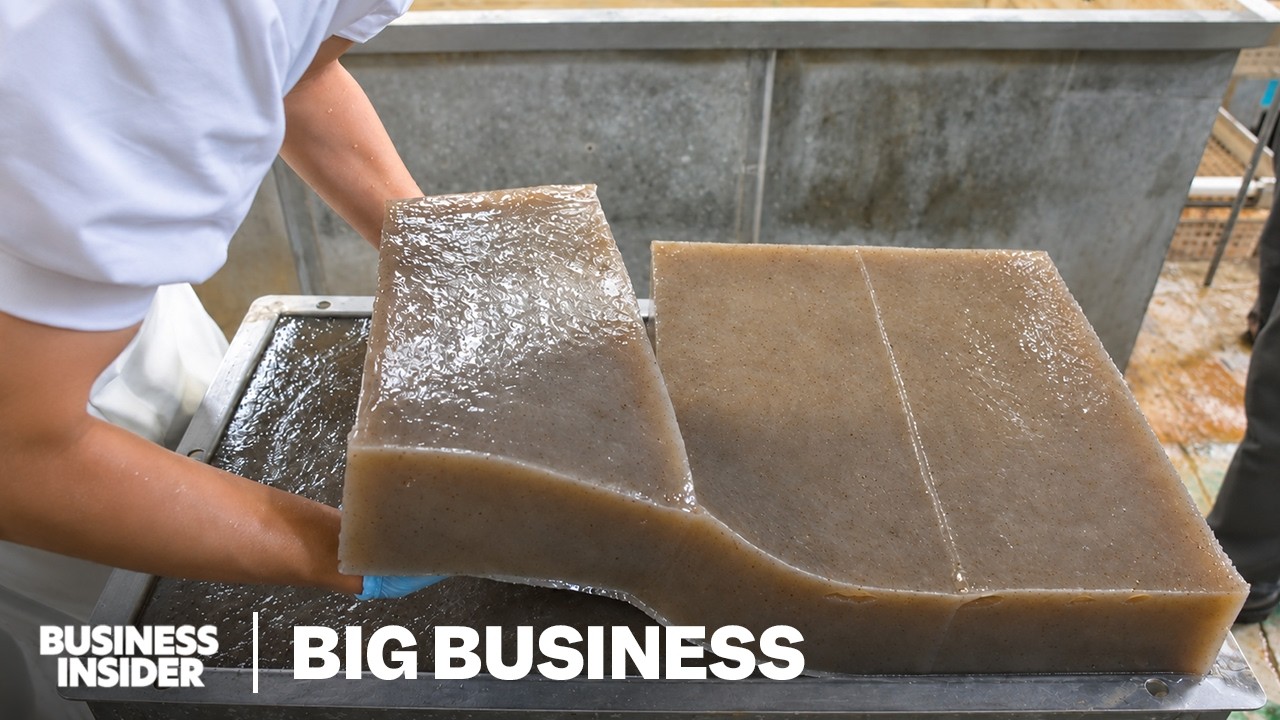
Shirataki noodles are made from konjac, a low-calorie, gluten-free food eaten in Japan for more than 1,000 years. In recent years, shirataki has taken off abroad and is often marketed as “miracle noodles.” But in Japan, the industry that grows and processes it is rapidly shrinking.
We traveled from Tokyo to Gunma Prefecture, which produces more than 90% of Japan’s konjac crop, to see how it’s grown and transformed into noodles, blocks, and jerky. We meet family-run factories and farmers facing falling demand, rising costs, an aging workforce, and harsher weather while betting that new products and growing interest in America can keep this centuries-old food tradition alive.
Watch our complete collection of Big Business videos: https://bit.ly/47ODoei
00:00 – Intro: Japan’s Konjac Tradition
01:28 – Inside a Tokyo Konjac Factory
03:32 – The Low-Calorie ‘Miracle Noodle’
04:20 – A Family Business Passed Down
05:24 – Why Japan Is Eating Less Konjac
06:27 – Growing Konjac in Gunma
08:36 – History of Konjac
11:08 – Can Konjac Jerky Save a Factory?
12:45 – Finding New Customers Overseas
13:52 – Keeping the Centuries-Old Food Tradition Alive
14:33 – Credits
——————————————————
#konjac #shirataki #noodles #glutenfree #japan #bigbusiness
Business Insider is a global newsroom covering business, technology, innovation, and the economy.
Visit our homepage for the top stories of the day: https://www.businessinsider.com/?utm_source=youtube
Sign up for our newsletters: https://www.businessinsider.com/subscription/newsletter?utm_source=youtube
How Japan Turns Toxic Plants Into ‘Miracle Noodles’ | Big Business